
Unique & thoughtful
A unique and thoughtful game that is full of satisfying interactions. Every riddle / level is unique and you can really see the care and craft that has been poured into this app.

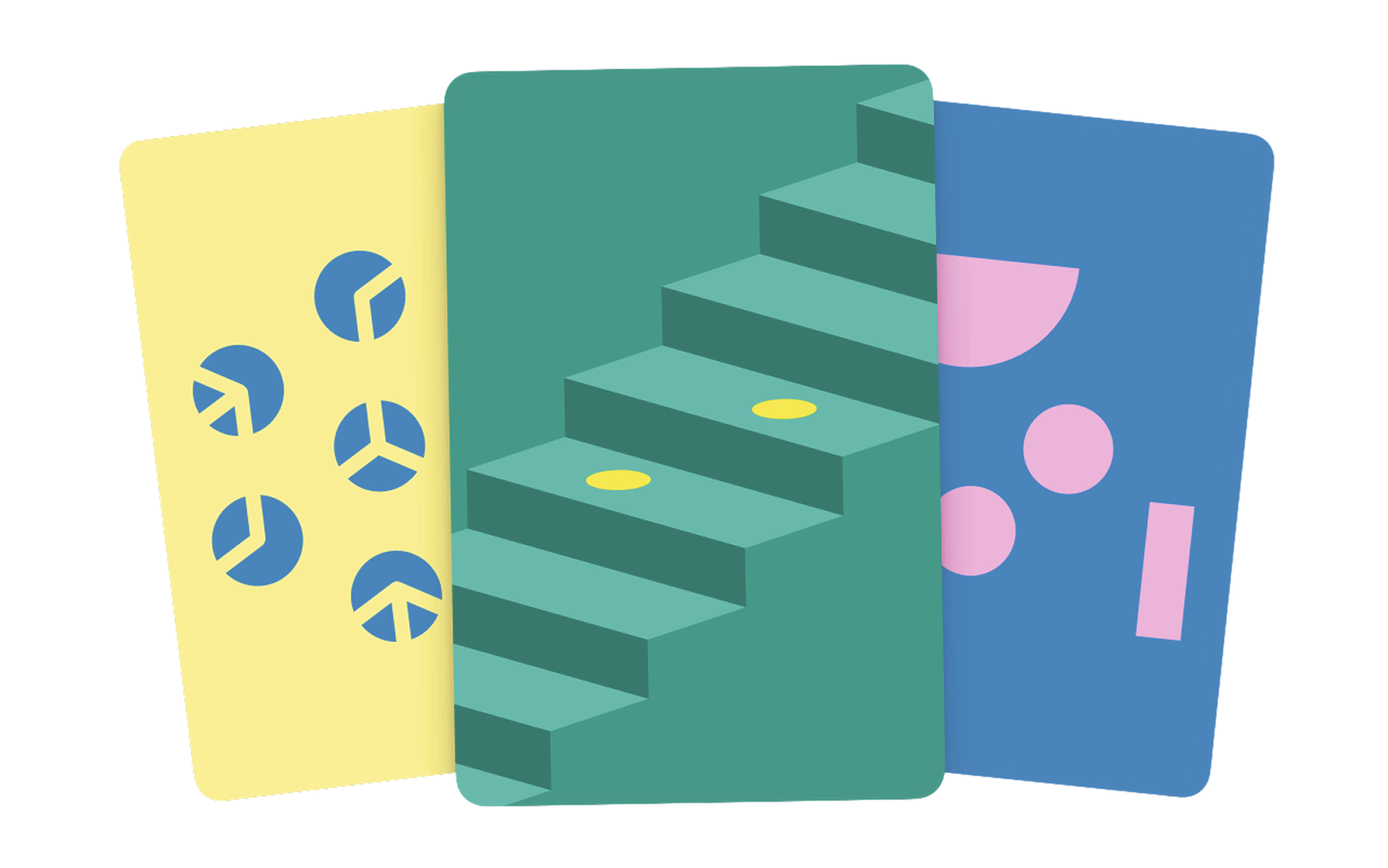
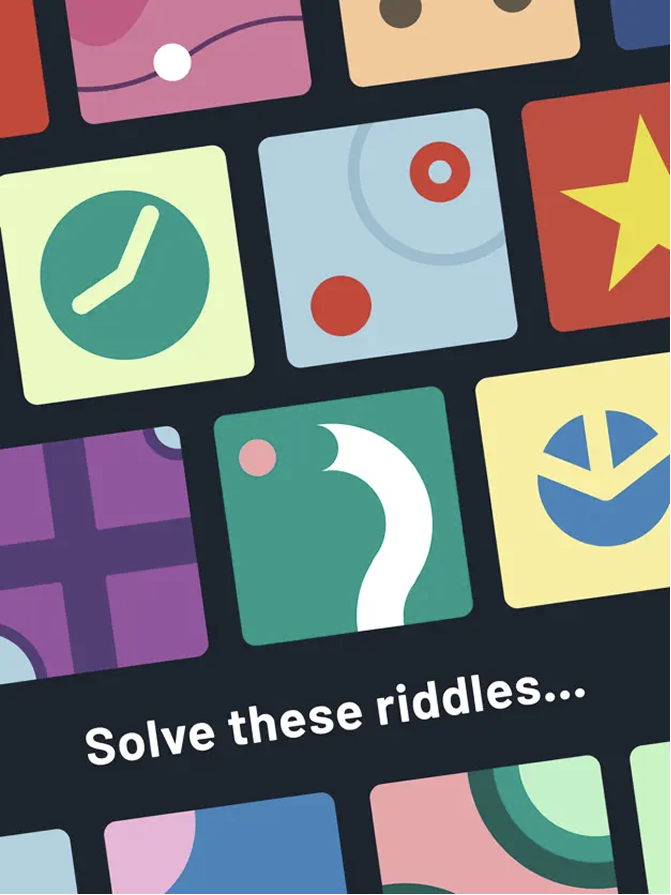
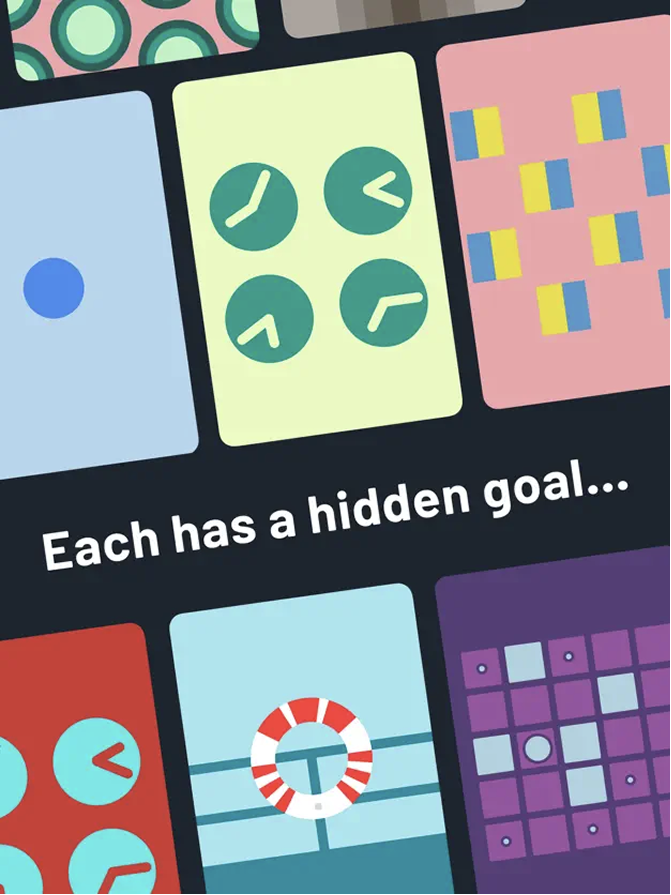
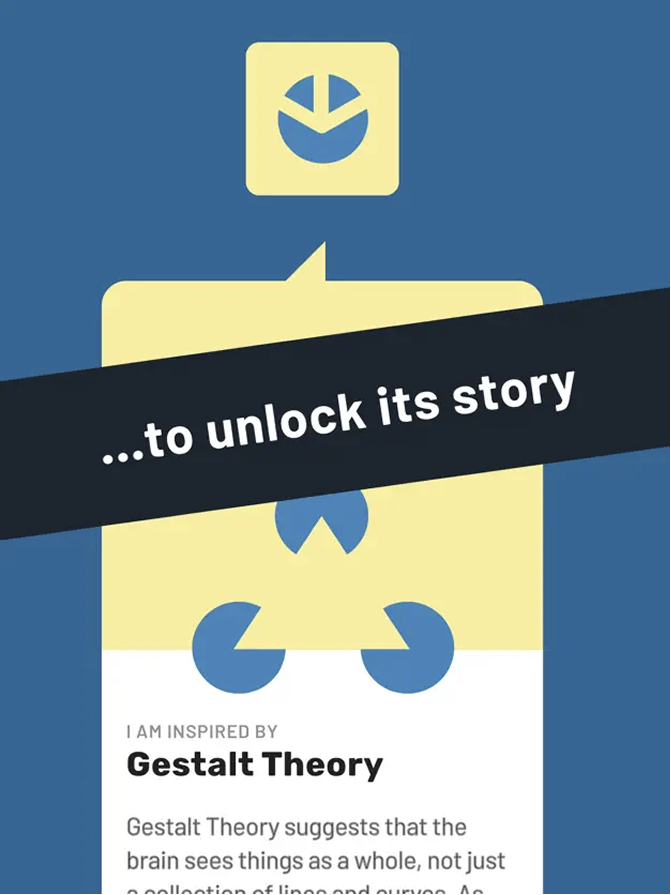
Secret Signs is a game of visual riddles, where the point is to figure out what the point is. Each riddle has a unique look, its own mechanic and a secret goal.
Visit secretsignsgame.com

4.6 out of 1.5K ratings
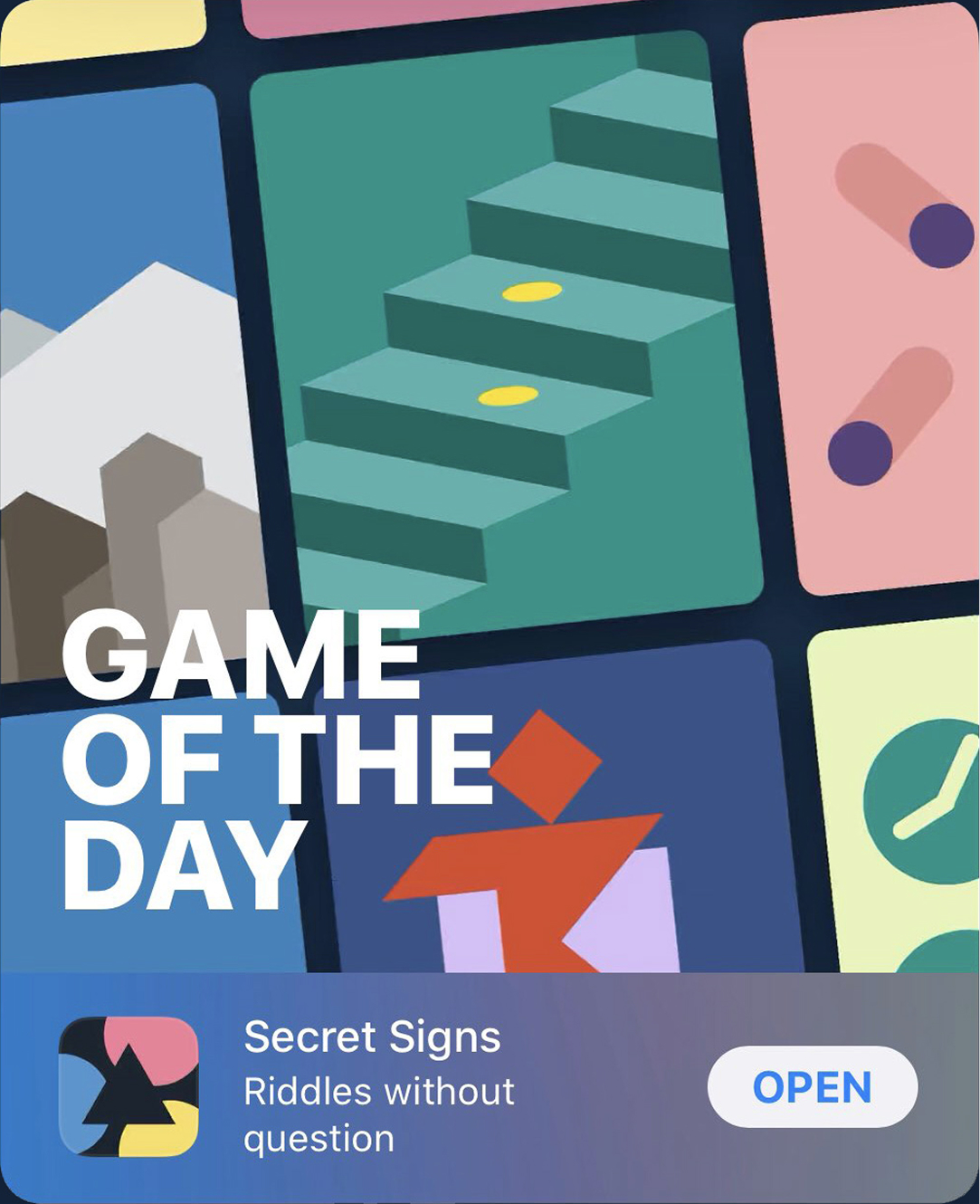
iOS Game of the Day
Worldwide
330,000 app installs
18,000 in-app purchases
"Secret Signs is a fabulous way to broaden your mind at the same time as challenging it."
A unique and thoughtful game that is full of satisfying interactions. Every riddle / level is unique and you can really see the care and craft that has been poured into this app.
I've been using it with my concussion and brain injury patients. Solving these is great for multitasking, prospective problem solving, and concentration. I'm a HUGE fan!
It's really boring. Just have to guess what to do. It doesn't have any sense. Uninstalled. There is no creativity in this game.
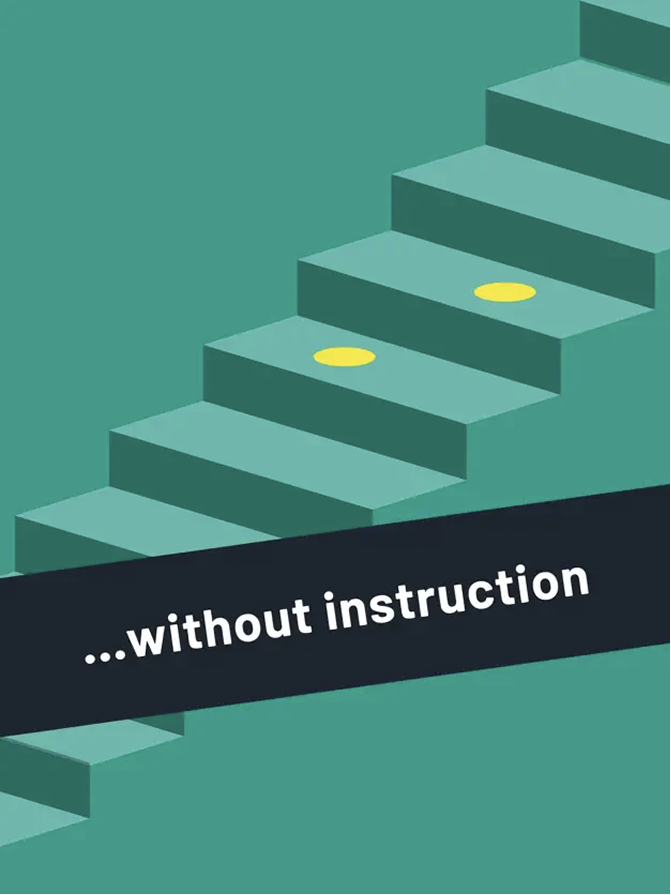
Can a puzzle be solved without any instruction or stated goal?
That question was starting point. To make these visual riddles both fun and solvable, each needed exactly the right amount of ambiguity: enough so the player could deduce the interaction from the visuals, the goal from the interaction, and the path to connect action to goal.
As a designer I'm used to asking "what's the affordance?" and "what can the user be assumed to know?". Those questions got a new meaning here, stripped of almost all context.
It's been the most fun and challenging UI to design.
It's usually right to narrow the user you're designing for. You can't build for everyone. But since this game explored the fundamentals of semantics, I decided to break the rule and go as wide as I could.
Play-testing showed that even without instructions, people's lines of thinking were often surprisingly alike and followed similar discovery paths. And where approaches differed, providing multiple clues in visual and interaction allowed players to find their own way to the solution.
It was especially interesting to see the game played by different kinds of players, especially across ages. There were 3 year olds solving puzzles by unhindered curiosity, while seasoned puzzlers got challenged to put learned patterns aside.
I won't claim the game is for everyone (see review above), but it's designed for anyone.
If you want to work together, or just say hi, email me at wouter@walmink.com.
Send email